Mystery
The Womer Woe-Water
When this dry stream ran again, folk braced for famine, plague or battle.
Stand where it happened
- What's there
- The village on the River Ver; the brook is lost
- Legend from
- 1400s
- Tone
- Eerie
Mystery · Redbourn
Open on the map: directions, what's there today and read-aloud →
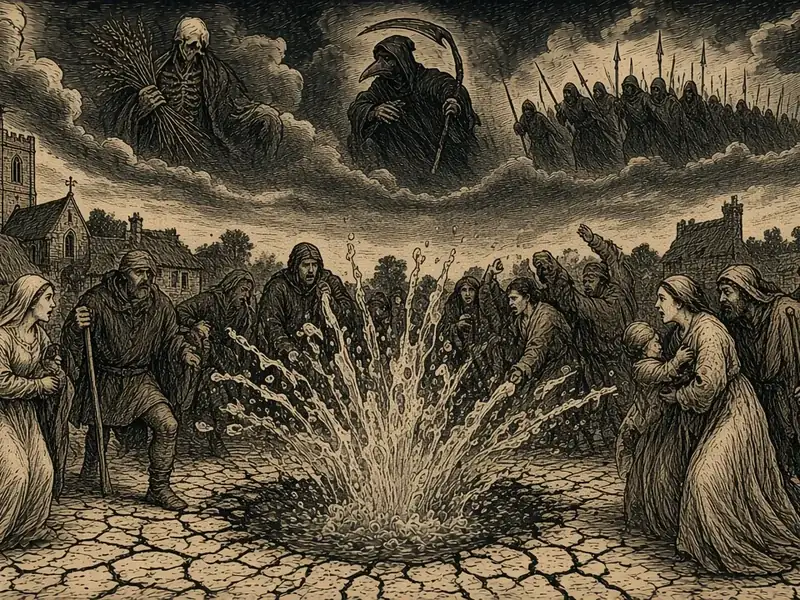
When this dry stream ran again, folk braced for famine, plague or battle.
Stand where it happened
The brook isn't on modern maps, so the pin marks Redbourn, on the upper River Ver.
The stream here once had a grim reputation: when the Womer broke out at Redbourn, people braced for famine, plague or war.
Medieval England had a handful of woe-waters, springs and streams that broke out of dry chalk ground only in certain years, and whose flowing was taken as a warning of disaster. The fifteenth-century chronicler John Warkworth listed a 'Womere' near St Albans among them: when it ran, folk knew that dearth, pestilence or a great battle was coming. Sir Henry Chauncy, writing in 1700, placed it at Redbourn, where a small brook called the Wenmer or Womer sometimes burst out to join the Ver, foretelling famine or some other danger.