Custom
The Hexton Pole Battle
Every Hock-tide the women dragged the ash pole downhill, whatever the men did.
Stand where it happened
- What's there
- A bridleway up a hill across farmland
- Legend from
- Tudor
- Tone
- Light-hearted
Custom · Hexton
Open on the map: directions, what's there today and read-aloud →
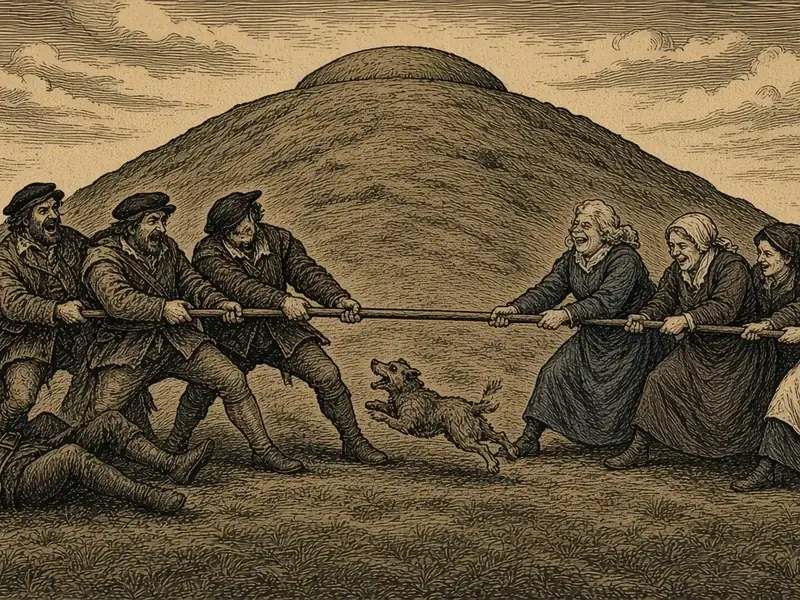
Every Hock-tide the women dragged the ash pole downhill, whatever the men did.
Stand where it happened
A bridleway climbs Wayting Hill across farmland. Stay on the bridleway.
The hill above Hexton once saw the village women battle the men for an ash pole every Hock-tide, and the women usually won.
Hock-tide, the second Monday and Tuesday after Easter, was a medieval money-raising festival that pitted the men of a parish against the women. At Hexton it lasted into Elizabeth I's reign, and the lord of the manor Francis Taverner recorded what old people remembered. Villagers climbed to the top of Weyting Hill, the highest point in the parish and crowned by an ancient burial mound, where a long, strong ash pole stood. The women tried to drag it downhill while the men hauled it back up, and any weaker man they caught was roughly besmeared. The steep slope favoured the women, who carried the pole to the cross by the town house.
One sourceOnly one written account of this legend has been found so far.